Do you ever feel exhausted even after getting a full night’s sleep? It might be time to consider that true rest goes beyond just sleeping. While physical rest is essential, your body and mind also need other types of rest to recharge fully. Let’s explore the seven types of rest and how they can restore your energy and balance your life.
What Are the Seven Types of Rest?
In a world filled with constant demands and distractions, many of us unknowingly neglect essential forms of rest. Dr. Saundra Dalton-Smith introduced the concept of the seven types of rest, each addressing a unique aspect of exhaustion.
Don’t forget to grab your free A4 poster featuring the 7 Types of Rest. This beautifully designed, printable poster is a perfect visual reminder to prioritize the kind of rest your mind, body, and soul need most. Display it in your workspace, bedroom, or anywhere you’ll see it often to stay inspired and committed to your well-being. Download it now and take the first step toward a more rested and balanced life!
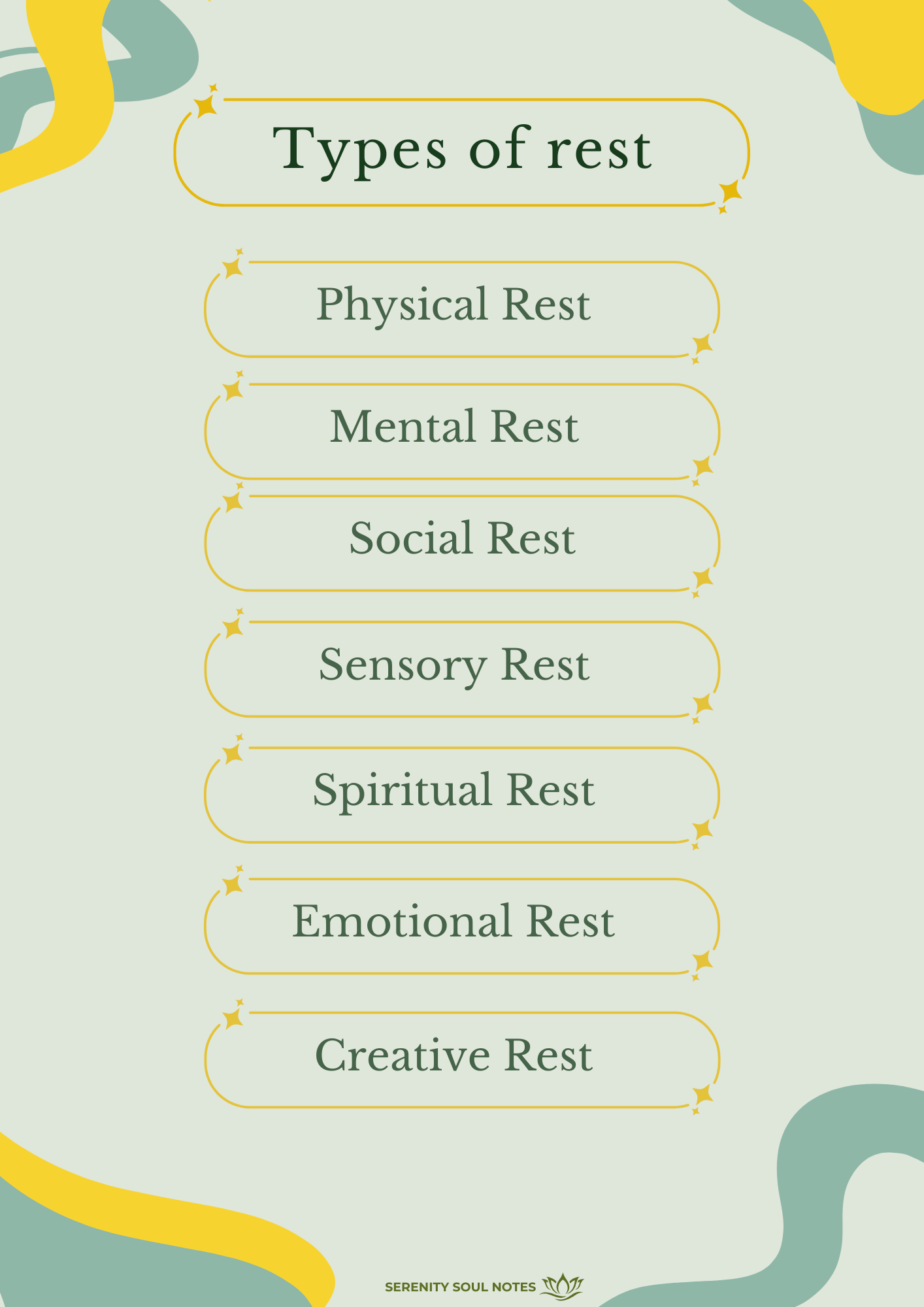
- Physical Rest
Encompasses passive activities like sleeping and active recovery practices like yoga or stretching. It’s essential for muscle recovery, maintaining energy, and reducing fatigue. - Mental Rest
Offers relief from a cluttered or overactive mind. Taking short breaks during the day, journaling, or practicing mindfulness can help quiet mental noise. - Emotional Rest
Helps you release the burden of carrying others’ emotions or hiding your own feelings. Authentic conversations and self-reflection create space for emotional clarity. - Social Rest
Balances the energy you give and receive in relationships. It’s about spending time with people who uplift you and stepping away from those who drain you. - Sensory Rest
Reduces overstimulation from screens, noise, and other sensory inputs. This might mean taking a screen break, dimming the lights, or simply closing your eyes for a moment. - Creative Rest
Restores the wonder and inspiration needed for problem-solving and innovation. Engage with art, nature, or hobbies to rekindle creativity. - Spiritual Rest
Involves reconnecting with purpose, meaning, or a sense of belonging. This can include meditation, prayer, or acts of service that connect you to something bigger than yourself.
Recognizing Your Rest Deficits
When exhaustion creeps in, ask yourself what type of rest you’re truly lacking. If your body feels heavy, physical rest might be needed. If your creativity feels blocked, creative rest could be the answer. Understanding these signals is key to choosing the most effective way to restore your energy.
Introducing the “7 Types of Rest Printable eBook”
To dive deeper into this transformative concept, check out the “7 Types of Rest Printable eBook.” This beautifully designed 11-page guide helps you evaluate your rest habits and provides actionable steps to replenish your energy. With insightful worksheets, a printable poster, and guided reflection questions, this resource is perfect for creating a personalized rest plan that fits your unique needs.
👉 Download Your Copy Now and start your journey to balanced energy and true well-being.
Why Rest Isn’t Lazy
In a culture that glorifies busyness, rest is often misunderstood as laziness. The truth is, rest is a powerful tool for productivity, creativity, and overall happiness. When you give yourself permission to rest, you’re also giving yourself permission to live fully.
Practical Tips to Incorporate Rest
- Schedule It: Make rest a non-negotiable part of your day. Put reminders in your calendar for intentional breaks.
- Be Mindful: Pay attention to your energy levels throughout the day and address deficits as they arise.
- Experiment: Not every rest activity will resonate. Try different methods to find what works best for you.
- Create Boundaries: Limit activities or people that drain your energy, and prioritize those that replenish it.

 Serenity Soul Notes
Leave a reply to How Self‑Care Fuels Your Personal Growth – Serenity Soul Notes Cancel reply