Self-awareness is a cornerstone of personal growth, emotional intelligence, and fulfilling relationships. One of the most effective tools for exploring self-awareness is the Johari Window—a framework designed to help individuals understand themselves better while improving communication with others.
In this blog post, we’ll dive into what the Johari Window is, how it works, and why it’s an invaluable resource for personal and interpersonal development.
What Is the Johari Window?
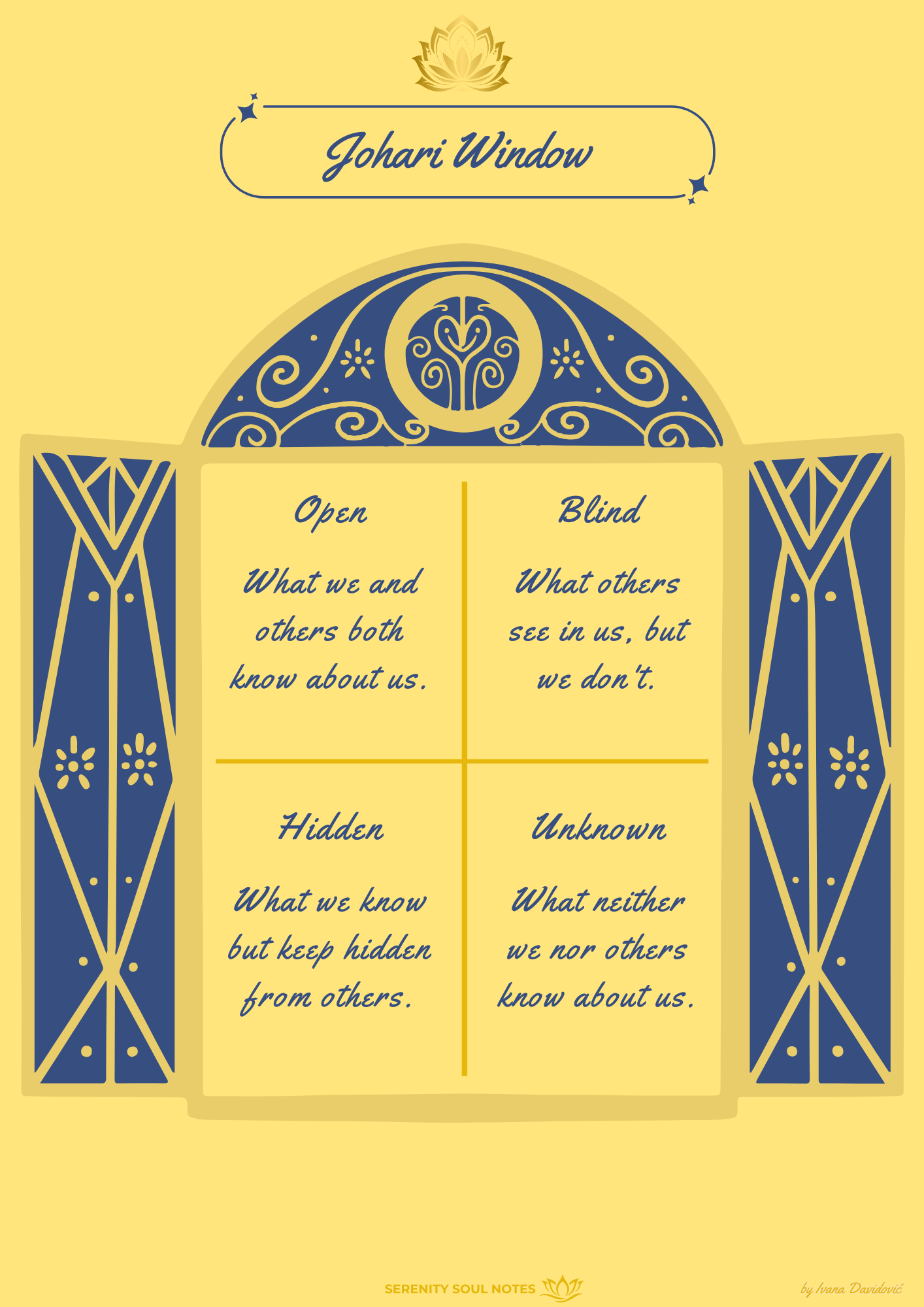
The Johari Window, developed by psychologists Joseph Luft and Harrington Ingham, is a visual model of self-awareness and interpersonal dynamics. It consists of four quadrants that represent different aspects of your self-knowledge and how others perceive you:
- Open Area: Information about yourself that you and others are aware of (e.g., your strengths, likes, and habits).
- Blind Spot: Information others know about you but that you’re unaware of (e.g., behavioral quirks or strengths you overlook).
- Hidden Area: Information you know about yourself but choose to keep private from others (e.g., fears, insecurities, or personal experiences).
- Unknown Area: Aspects of yourself that neither you nor others are aware of—potential waiting to be discovered.
The Johari Window is dynamic, meaning it evolves as you grow in self-awareness and engage in open, honest communication. o support your journey, we’ve created a free A4 Johari Window poster that you can download. This beautifully designed visual tool is perfect for keeping the framework in view as you reflect, seek feedback, and track your progress toward greater self-awareness.
Why Is the Johari Window Important?
The Johari Window is more than just a theoretical framework—it’s a practical tool for personal and professional growth. By using it, you can:
- Build trust in relationships: Sharing aspects of yourself can foster deeper connections.
- Improve self-awareness: Learning from feedback helps uncover blind spots.
- Enhance communication: Transparency reduces misunderstandings.
- Discover hidden potential: Exploring the unknown can lead to personal breakthroughs.
How to Use the Johari Window
- Start with Reflection
Reflect on what you know about yourself. Make a list of your strengths, values, and areas for improvement. - Seek Feedback
Ask trusted friends, family, or colleagues to share their observations about you. Be open to constructive feedback—it’s key to uncovering your blind spots. - Share Authentically
Consider sharing more about yourself in safe, supportive environments. Vulnerability can deepen relationships and expand your Open Area. - Explore the Unknown
Engage in activities that push you out of your comfort zone, such as trying new hobbies, journaling, or working with a coach or therapist.
Take Your Self-Awareness Journey Further
Understanding yourself is a lifelong process, and the Johari Window offers a structured approach to growing self-awareness and fostering meaningful relationships.
📘 Ready to go deeper? Our Johari Window Workbook is the perfect companion for your self-discovery journey. This 15-page printable guide includes:
- Reflection Exercises: Explore your Open, Hidden, Blind, and Unknown areas in depth.
- Feedback Prompts: Learn how to ask for and use feedback effectively.
- Growth Strategies: Discover practical steps to improve communication and trust.
- Printable Tools: Visualize your personal Johari Window with guided worksheets.
By using this workbook, you’ll not only gain clarity about yourself but also strengthen your relationships and unlock hidden potential.
Final Thoughts
The Johari Window is a simple yet profound tool for understanding yourself and others. By reflecting on what’s known, unknown, hidden, or shared, you can navigate relationships with greater empathy and self-awareness.
If this concept resonates with you, don’t miss the opportunity to deepen your exploration. Check out our Johari Window Workbook on Etsy—your guide to unlocking a more authentic, connected, and self-aware life.

 Serenity Soul Notes
This space is for you too — drop your thoughts below!