There’s something deeply freeing about putting pen to paper—not just to document your day, but to express yourself fully, without judgment or rules. Creative journaling is more than just writing; it’s a way to explore emotions, spark new ideas, and reconnect with yourself in a meaningful way.
Unlike traditional journaling, which often focuses on recording events, creative journaling opens up a world of self-expression through words, art, color, and design. Whether you’re sketching your emotions, creating vision boards, or structuring your thoughts with bullet points, your journal becomes a reflection of your mind—vibrant, evolving, and uniquely yours.
Journaling can be therapeutic, inspiring, and even life-changing. It helps reduce stress, boost creativity, and bring clarity to your thoughts. And the best part? There’s no wrong way to do it.
In this guide, we’ll explore different creative journaling methods, their benefits, and simple ways to get started. If you’ve ever wanted to add more creativity to your journaling practice, this is your invitation to dive in.
Why Creative Journaling?
Journaling has long been recognized as a powerful tool for self-discovery, mental clarity, and emotional healing. But creative journaling takes things a step further—it allows for more freedom, playfulness, and exploration.
Some of the biggest benefits include:
Enhanced Self-Expression: When words aren’t enough, colors, sketches, or even collages can capture your emotions in a way that feels authentic.
Stress Relief & Mindfulness: Journaling slows down your thoughts, helping you process emotions and stay present in the moment.
Boosted Creativity & Problem-Solving: Playing with different journaling styles can unlock new ideas and help you think outside the box.
Stronger Emotional Awareness: Writing about your experiences—through poetry, freewriting, or even doodles—helps you understand yourself on a deeper level.
Ready to explore? Here are some creative journaling techniques to try.
Creative Journaling Techniques to Try
1. Art Journaling: Express Through Color & Sketches
Art journaling is all about blending words and visuals. It doesn’t require artistic skills—just a willingness to explore. You can paint, collage, doodle, or experiment with mixed media to express emotions, thoughts, or dreams.
🖌️ How to Start:
- Use watercolor or acrylic paints to create colorful backgrounds before writing.
- Cut out magazine clippings and create a vision board page.
- Doodle or sketch emotions instead of writing them out.
🎨 Best for: Those who love colors, textures, and non-verbal self-expression.
2. Bullet Journaling: Structure Meets Creativity
Bullet journaling (or BuJo) is a hybrid between a planner and a journal, designed to help you stay organized while also allowing for creativity.
📝 How to Start:
- Use bullet points, symbols, and short notes instead of long paragraphs.
- Track habits, moods, or daily gratitudes with simple charts.
- Design a monthly spread with stickers, washi tape, and colorful pens.
📌 Best for: Those who enjoy structure but still want flexibility and creativity in their journaling.
3. Stream-of-Consciousness Writing: Let Thoughts Flow
Sometimes, the best way to release emotions and gain clarity is to write without filtering. Stream-of-consciousness journaling (also known as freewriting) is about letting words pour out without worrying about grammar, spelling, or making sense.
✍️ How to Start:
- Set a timer for 5-10 minutes and write whatever comes to mind.
- Avoid overthinking—let your thoughts flow naturally.
- Revisit your writing later to reflect on patterns and insights.
💭 Best for: Those looking to declutter their mind and tap into deeper thoughts.
4. Gratitude Journaling: Shift Your Mindset
Practicing gratitude can boost happiness, reduce stress, and improve your outlook on life. Gratitude journaling is simple yet transformative—it shifts your focus from what’s missing to what’s already present.
🌿 How to Start:
- Write down three things you’re grateful for every day.
- Describe a moment that brought you joy.
- Create a “gratitude jar” page where you jot down good things as they happen.
💖 Best for: Those looking to cultivate positivity and appreciation.
5. Poetry Journaling: Play with Words
Poetry allows you to express emotions in a creative, rhythmic way. It’s a great tool for exploring thoughts and feelings beyond structured sentences.
📜 How to Start:
- Write a poem based on your current mood.
- Use the first line of a favorite song or book as inspiration.
- Try different poetry formats like haikus, free verse, or acrostic poems.
🎶 Best for: Those who love wordplay and creative storytelling.
Tips to Get Started with Creative Journaling
- Choose a Journal That Inspires You – Whether it’s a blank sketchbook, a lined notebook, or a bullet journal, find one that makes you excited to write.
- Let Go of Perfection – Your journal is a safe space. There are no rules, and no one is grading you.
- Experiment with Different Tools – Use colored pens, stickers, washi tape, or even digital apps if that suits you.
- Create a Ritual – Set aside 5-10 minutes daily to journal, whether in the morning, before bed, or during quiet moments.
- Use Prompts for Inspiration – If you’re unsure where to start, prompts can help spark ideas (see below!).
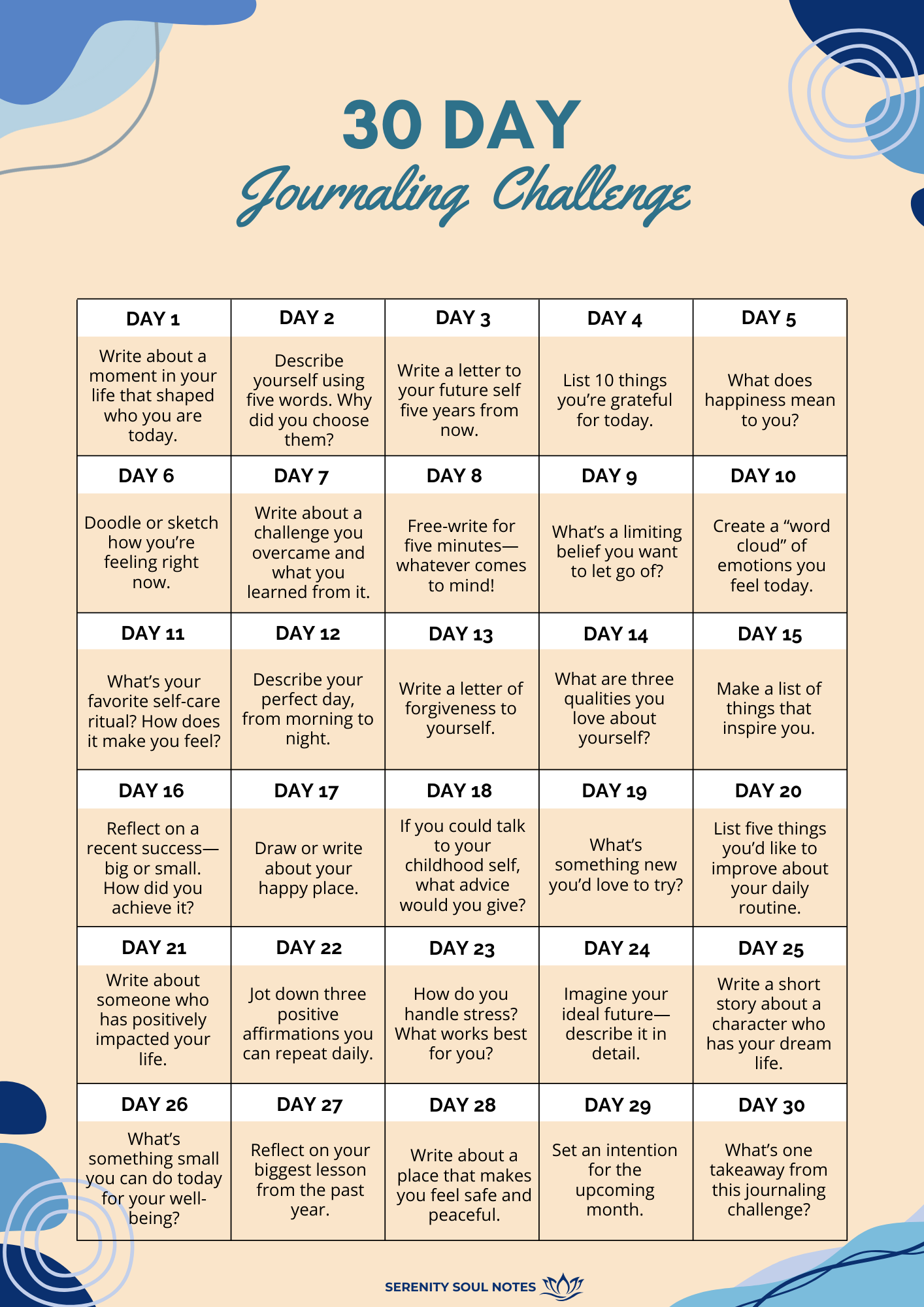
30-Day Creative Journaling Challenge:
Try journaling for a month with different styles! One day you might write a poem, the next you might sketch, and another day you might create a gratitude list. This keeps things fresh and exciting.
Final Thoughts
Creative journaling is a beautiful way to express yourself, explore your thoughts, and bring mindfulness into your life. Whether you’re drawn to art journaling, poetry, or bullet journaling, there’s a method that will resonate with you.
The most important thing? Just start. Your journal is a judgment-free zone—so grab a pen, open a page, and let your creativity flow.
📥 To help you begin, download our FREE 30-Day Journaling Challenge Calendar
Which creative journaling method excites you the most? Share in the comments—I’d love to hear about your journey!

 Serenity Soul Notes
This space is for you too — drop your thoughts below!